What Is Forex Trading? A Complete Beginner's Guide
Every day, roughly $7.5 trillion changes hands on the foreign exchange market. That makes forex the largest, most liquid financial market on the planet — bigger than all stock markets combined. If you've ever exchanged currency at an airport or bought something priced in a foreign currency online, you've already participated in forex, just at the retail level.
But forex trading — actively speculating on currency price movements for profit — is a different game entirely. This guide covers how that game works, who the players are, and what you need to understand before you put money on the line.
The Basics: Currencies Trade in Pairs
Forex trading always involves two currencies. You're simultaneously buying one and selling another. These are quoted as pairs — EUR/USD, GBP/JPY, USD/ZAR — with the first currency (the base) measured against the second (the quote).
When you see EUR/USD = 1.0850, that means one euro buys 1.0850 US dollars. If you think the euro will strengthen against the dollar, you buy EUR/USD (go long). If you think the euro will weaken, you sell (go short).
This is fundamentally different from stocks, where you buy shares in a company and hope the price goes up. In forex, you're trading the relationship between two economies.
The Major Pairs
Most beginners stick to the major pairs, which all include the US dollar:
| Pair | Nickname | What Drives It |
|---|---|---|
| EUR/USD | Fiber | ECB vs Fed policy, eurozone data |
| GBP/USD | Cable | Bank of England, UK economic data |
| USD/JPY | Gopher | Risk sentiment, Bank of Japan policy |
| USD/CHF | Swissie | Safe-haven flows |
| AUD/USD | Aussie | Commodity prices, China data |
| USD/CAD | Loonie | Oil prices, Bank of Canada |
Majors have the tightest spreads and deepest liquidity, making them the most forgiving for new traders. For a deeper look at pair selection, see our guide on the best currency pairs for beginners.

How the Forex Market Actually Works
There's no central exchange for forex. No opening bell, no closing bell. It's an over-the-counter (OTC) market — a decentralised network of banks, institutions, brokers, and individual traders connected electronically.
Trading runs 24 hours a day, five days a week, rotating through three main sessions:
- Sydney/Tokyo (Asian session): Lower volatility, range-bound moves
- London (European session): Highest volume, major moves begin here
- New York (US session): Overlaps with London for peak liquidity
The overlap between London and New York (roughly 13:00–17:00 GMT) is when the market is most active. Understanding forex market sessions matters because volatility and liquidity directly affect how your trades behave.
Who Moves the Market?
Retail traders — individuals like you — account for a small fraction of daily volume. The real movers are:
- Central banks (setting interest rates and monetary policy)
- Commercial banks (handling massive currency flows for clients)
- Hedge funds and institutional investors (speculative and hedging activity)
- Multinational corporations (converting revenues across currencies)
This means the forex market is driven primarily by macroeconomic forces: interest rate decisions, inflation data, employment figures, and geopolitical events. You're trading alongside some of the most sophisticated participants in global finance.
Key Concepts You Need Before Trading
Pips and Lot Sizes
A pip is the smallest standard price movement in a currency pair — typically the fourth decimal place (0.0001 for most pairs). If EUR/USD moves from 1.0850 to 1.0860, that's a 10-pip move.
The monetary value of a pip depends on your position size (lot size):
- Standard lot (1.0): 100,000 units — 1 pip = ~$10
- Mini lot (0.1): 10,000 units — 1 pip = ~$1
- Micro lot (0.01): 1,000 units — 1 pip = ~$0.10
Our pip value calculation guide walks through the maths in detail.
Leverage and Margin
Forex trading uses leverage, which means you can control a large position with a fraction of the capital. With 1:100 leverage, you control $100,000 with just $1,000 of margin.
This amplifies both profits and losses. A 1% move in your favour on a 1:100 leveraged position doubles your margin. A 1% move against you wipes it out.
If you're new to this concept, read our complete leverage guide before trading live. It's arguably the most important thing a beginner needs to understand.
The Bid-Ask Spread
Every currency pair has two prices: the bid (what you sell at) and the ask (what you buy at). The difference is the spread, and it's the primary cost of trading forex. A tighter spread means lower cost per trade.
What You Need to Start Trading
1. A Regulated Broker
This isn't optional. An unregulated broker means no protection for your funds, no recourse if something goes wrong, and no guarantee of fair execution. If you're based in South Africa, our guide on how to start forex trading in South Africa covers the regulatory landscape in detail.
2. A Trading Platform
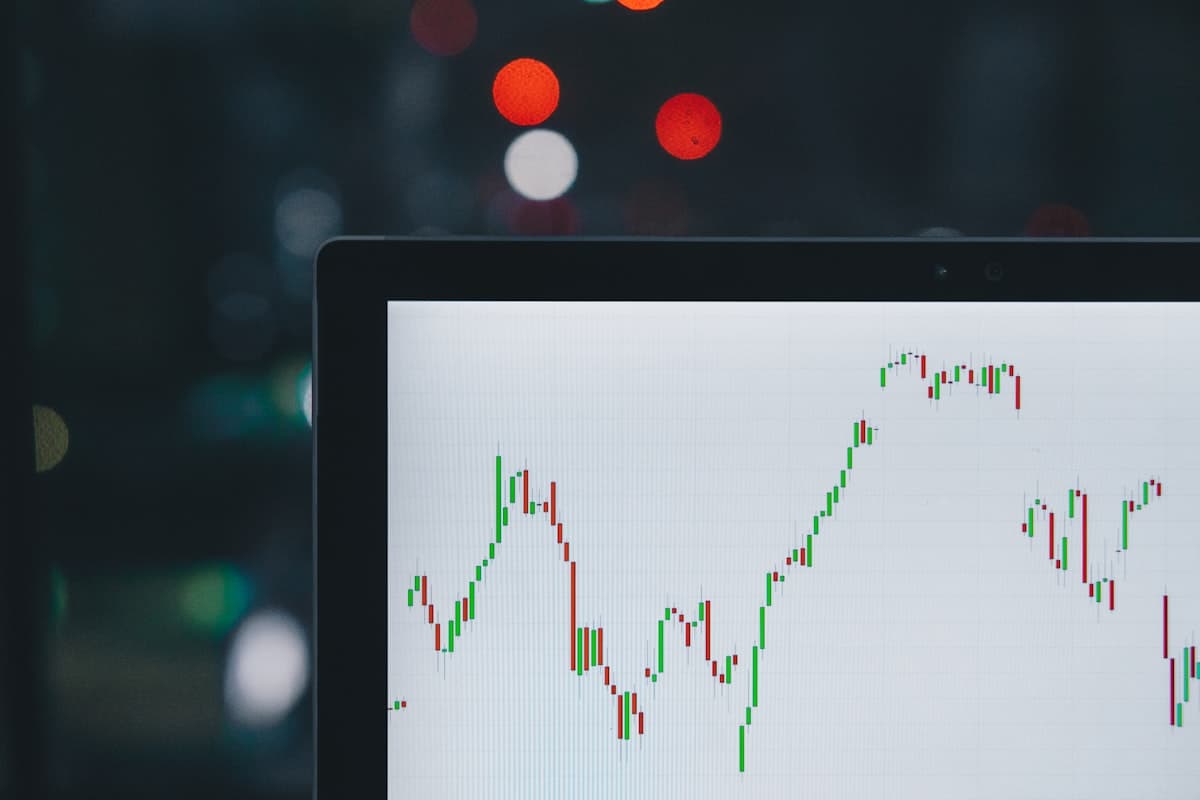
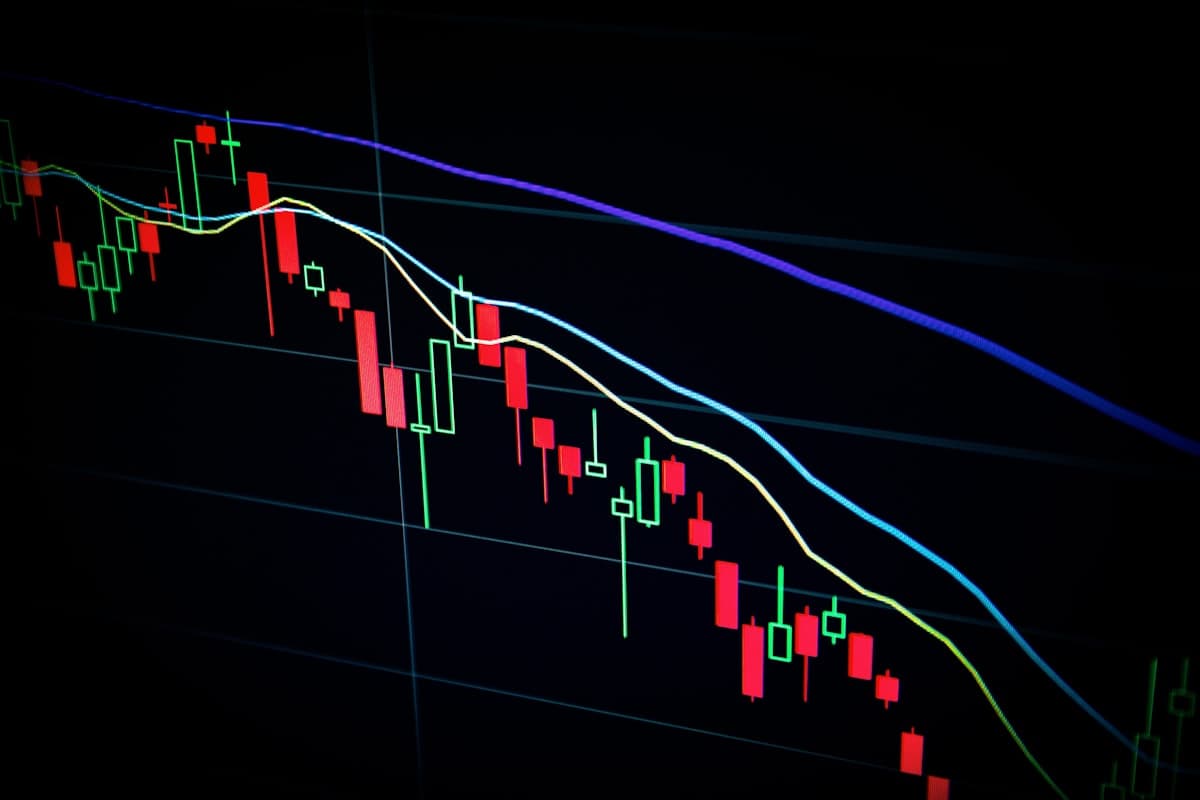
Most retail forex trading happens on MetaTrader 4 (MT4) or MetaTrader 5 (MT5). These platforms provide charting tools, order execution, account management, and access to technical indicators. Learning to read forex charts on your platform is one of the first practical skills you'll develop.

3. A Demo Account
No serious trader skips this step. A demo account lets you trade with virtual money in real market conditions. You learn the platform, test strategies, and build habits — all without risking a cent. Stay on demo until you're consistently executing your plan without hesitation.
4. Education
Understanding how the market works is necessary, but it's not sufficient. You also need to know:
- Technical analysis — reading charts and price patterns
- Fundamental analysis — understanding how economic data moves currencies
- Risk management — position sizing, stop losses, and capital preservation
- Trading psychology — managing fear, greed, and discipline under pressure
How Forex Traders Actually Make (and Lose) Money
The mechanics are simple: buy low, sell high (or sell high, buy low if you're shorting). The reality is harder.
A profitable forex trader typically:
- Has a tested strategy with a defined edge
- Risks a small percentage of their account per trade (usually 1-2%)
- Accepts that many trades will be losers
- Focuses on the long-term expectancy of their system, not individual trades
- Controls their emotions and sticks to their rules
An unprofitable trader typically:
- Trades without a plan or with a vague strategy
- Overleverages to chase quick gains
- Moves stop losses or doesn't use them
- Revenge-trades after a loss
- Jumps between strategies constantly
The difference is almost entirely psychological discipline and risk management, not market prediction ability.
Common Misconceptions
"Forex is a get-rich-quick scheme." It's not. Most retail traders lose money. The ones who succeed treat it as a skill that takes years to develop.
"You need a lot of money to start." You can open micro accounts with a few hundred dollars. But undercapitalisation creates pressure to overlever, which is dangerous. Start small, but be realistic about what small accounts can achieve.
"More trading equals more profit." Overtrading is one of the most common mistakes. Some of the most profitable traders only take a few setups per week.
"Technical analysis predicts the future." It doesn't. It identifies probabilities based on historical patterns. The market can — and frequently does — do the opposite of what the chart suggests.
Your Next Steps
If this is genuinely new territory for you, here's a practical sequence:
- Open a demo account and get familiar with the platform
- Learn to read charts — candlesticks, timeframes, basic patterns
- Understand pip values and position sizing so you know what you're risking
- Study one or two currency pairs deeply rather than watching twenty
- Build a simple trading plan with clear entry rules, exit rules, and risk parameters
- Trade on demo for at least 2-3 months before going live
- Start live trading with minimal size and scale up as you prove consistency
Forex trading is a skill. Like any skill, it takes structured practice, honest self-assessment, and patience. The market will be here tomorrow. There's no rush.
Ready to get started? Open a free demo account with ComoFX and practice trading with virtual funds in real market conditions.