How to Start Forex Trading as a Complete Beginner
You've heard people talk about forex trading. Maybe a friend mentioned it, or you saw something on social media. Now you want to try it yourself, but you have no idea where to start.
This guide walks you through the process from zero. No assumed knowledge, no unnecessary jargon. Just the steps to go from knowing nothing to placing your first trade — and doing it without blowing your money in the first week.
Step 1: Learn What Forex Actually Is
Forex (foreign exchange) is the market where currencies are traded against each other. When you trade forex, you're buying one currency while selling another. These come in pairs — EUR/USD means you're trading the Euro against the US Dollar.
If you buy EUR/USD at 1.0800 and sell at 1.0850, you made 50 pips of profit. If it drops to 1.0750, you lost 50 pips. That's the basic mechanic.
The forex market is the largest financial market in the world, trading over $7 trillion per day. It's open 24 hours a day, five days a week, which means you can trade around your schedule whether you're in Johannesburg, Lagos, or Nairobi.
You don't need to master everything at once. Start with understanding currency pairs, pips, and lots. Our Forex 101 guide covers the fundamentals in detail.
Step 2: Choose a Regulated Broker
Your broker is the platform you trade through. Choosing the right one matters more than most beginners realise.
The most important factor is regulation. A regulated broker is licensed by a financial authority that oversees their operations, ensures client funds are kept separate from company funds, and provides a complaint process if something goes wrong.
For South African traders, look for FSCA (Financial Sector Conduct Authority) regulation. This is your protection against scams and unfair practices.
Other things to check:
- Spreads — the difference between buy and sell price. Lower is better. Under 1 pip on EUR/USD is good.
- Minimum deposit — some brokers let you start with as little as $10 or R200.
- Deposit methods — local methods like EFT are cheaper than international wire transfers.
- Trading platform — MetaTrader 4 and MetaTrader 5 are the industry standards. They're free and well-documented.
For a detailed comparison, read our guide on choosing the best forex broker in South Africa.
Step 3: Open a Demo Account
This is the step most beginners skip, and it's the step that separates those who learn from those who lose.
A demo account is a practice account with virtual money. You trade in real market conditions — live prices, real spreads, actual market movements — but you're not risking any of your own money. If you lose, it costs you nothing. If you win, you don't make real money either. The point is to learn.
What to do on a demo account:
- Learn how to place buy and sell orders
- Practice setting stop loss and take profit levels
- Get comfortable with the trading platform's interface
- Test different currency pairs to see how they move
- Start developing a basic trading routine
How long should you demo trade? At least one to three months. Some people say longer. The benchmark isn't time — it's consistency. If you can show consistent results on a demo account over 50 to 100 trades, you're closer to being ready for real money.
Open a free demo account with ComoFX to start practicing on a regulated platform.
Step 4: Learn to Read Charts
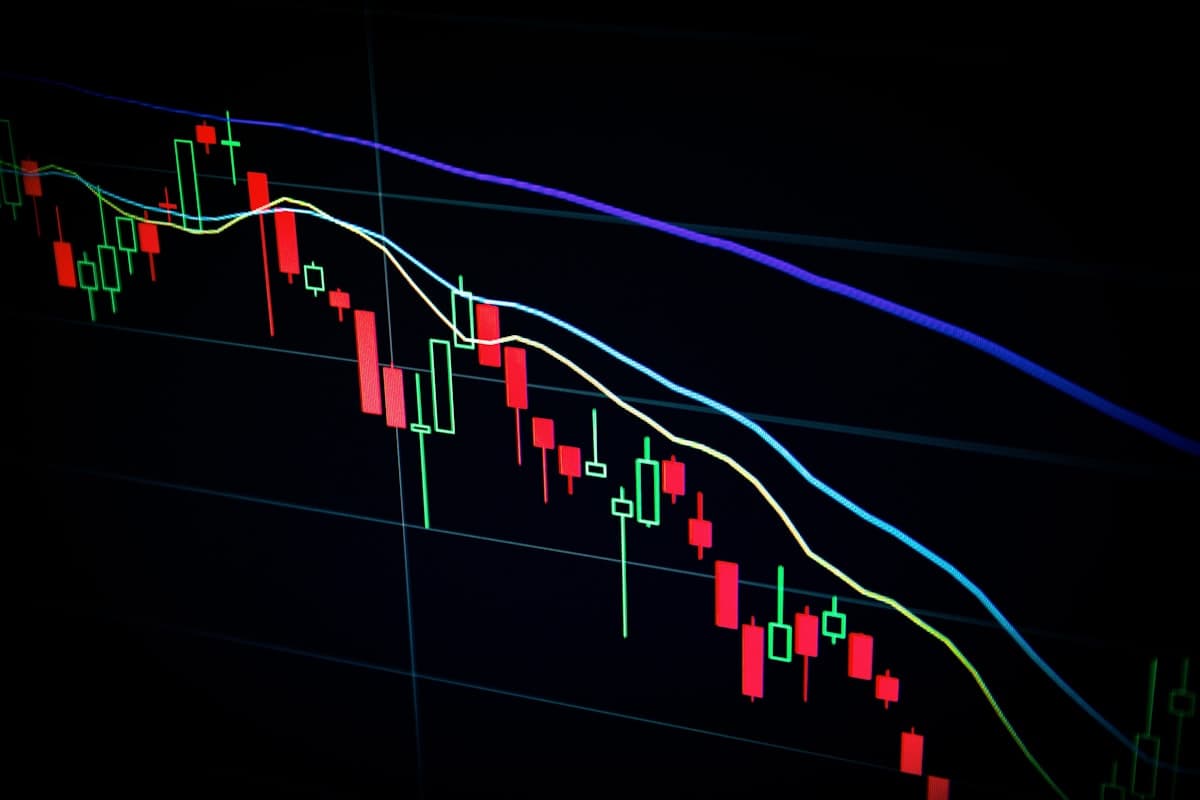
Charts are how traders visualise price movement. The most common chart type is the candlestick chart, where each "candle" represents a specific time period (1 minute, 1 hour, 1 day, etc.).
A green (or white) candle means price went up during that period. A red (or black) candle means price went down. The body of the candle shows the opening and closing price. The wicks show the high and low.
Two concepts to learn first:
Support — a price level where the market tends to stop falling and bounce back up. Think of it as a floor.
Resistance — a price level where the market tends to stop rising and pull back down. Think of it as a ceiling.
When price breaks through support or resistance, it often leads to a significant move. This is the basis of many trading strategies.
Don't try to learn every indicator and pattern at once. Start with candlesticks, support and resistance, and trend identification. Our technical analysis section goes deeper when you're ready.
Step 5: Build a Simple Strategy
A trading strategy is your set of rules for when to enter a trade, when to exit, and how much to risk. Without a strategy, you're guessing — and guessing doesn't work in forex.
The simplest beginner strategy: trend following.
The idea is straightforward. Identify the overall direction of the market (the trend), and trade in that direction. Don't try to predict reversals. Don't fight the market. If the trend is up, look for opportunities to buy. If the trend is down, look for opportunities to sell.
Basic trend following rules:
- Look at the daily chart to identify the trend direction
- Switch to the 4-hour or 1-hour chart for entry timing
- Enter in the direction of the trend when price pulls back to a support or resistance level
- Set your stop loss below the recent swing low (for buy trades) or above the recent swing high (for sell trades)
- Target a profit that's at least twice your risk (2:1 reward-to-risk ratio)
This won't work on every trade. No strategy does. But it gives you a structured approach instead of random clicking.
Step 6: Start Small With Real Money
When you've practiced on demo and have a strategy that shows promise, it's time to go live. But start small.
Micro lots (0.01 lots) let you trade with minimal risk. On a micro lot, each pip is worth roughly $0.10. A 50-pip loss costs you $5. This lets you experience real trading — the emotions, the psychology, the pressure — without risking significant money.
Rules for your first live trades:
- Only deposit money you can afford to lose completely. Not rent money. Not savings you need. Money that, if it disappeared tomorrow, wouldn't affect your life.
- Start with micro lots. Your ego might want to trade bigger. Ignore it.
- Risk no more than 1-2% of your account per trade. If you deposit R2,000, your maximum loss per trade should be R20 to R40.
- Always use a stop loss. No exceptions. Ever. A stop loss automatically closes your trade at a predetermined level to limit your loss.
- Keep a trading journal. Write down every trade: why you entered, what happened, what you learned. This is how you improve.
Common Mistakes Beginners Make
Almost every new trader makes these mistakes. Knowing about them in advance gives you a better chance of avoiding them.
Trading without a plan. Opening trades based on gut feeling, tips from social media, or because you're bored. Every trade should have a clear reason for entry, a stop loss, and a profit target before you click the button.
Overleveraging. Using maximum leverage on every trade because it feels exciting. High leverage amplifies losses just as much as profits. A 1:500 leverage account doesn't mean you should use all of it. Learn about how leverage works before turning it up.
Revenge trading. You lose a trade, get angry, and immediately open another trade to "make it back." This almost always leads to a bigger loss. If you lose a trade, step away. Come back with a clear head.
No stop loss. "It'll come back" is the most expensive sentence in trading. Sometimes it doesn't come back. A stop loss protects you from catastrophic losses.
Risking too much. Putting 10% or 20% of your account on a single trade. One bad trade shouldn't destroy your account. Keep risk per trade at 1-2%.
Expecting to get rich quickly. Social media is full of traders showing off luxury lifestyles. The reality is that most professional traders aim for 2-5% monthly returns. Consistent small gains compound over time. Get-rich-quick expectations lead to excessive risk and blown accounts.
Setting Realistic Expectations
Here's what nobody on social media tells you: most beginner traders lose money. Studies consistently show that 70-80% of retail forex traders lose money over time.
That doesn't mean you can't succeed. It means you need to take this seriously. The traders who eventually become profitable are the ones who treated it like a skill to develop over months and years, not a lottery ticket.
Realistic timeline:
- Months 1-3: Learning and demo trading. No real money yet.
- Months 3-6: Small live account with micro lots. Focus on following your strategy, not on profits.
- Months 6-12: Gradually increasing position sizes if you're consistently profitable. Still learning.
- Year 1+: You have a track record to evaluate. You know if your strategy works, where your weaknesses are, and what to improve.
Your Next Steps
- Read through the Forex 101 basics to build your foundation
- Open a free demo account and start practicing
- Spend at least a month learning the platform and price action
- When ready, open a live account with a small deposit and micro lots
The path from complete beginner to competent trader is longer than social media suggests, but it's a real path. Take it one step at a time.